Same day appointments Available | $99 New Patient Special Includes Exam and X-rays


By The Dentist Place of Clearwater | March 16, 2026
Having a tooth extracted, particularly the removal of wisdom teeth, can seem like a significant life ordeal. Although it is a standard procedure, others understandably have questions about how to smoothly recover. Your body will definitely know that it has undergone a procedure, and you might be nervous about the healing process; however, by following simple recovery tips, you can ensure smooth healing.
For many Clearwater residents who have recently had their wisdom teeth out, a common question they ask is how long it will take to feel normal again and what can be done about the discomfort. Don’t panic, because although everyone heals at their own pace, understanding what to expect and how best to look after yourself following surgery can dramatically reduce recovery time. With a bit of care, you will find your recovery to be speedy and as painless as feasible.
Wisdom Tooth Extraction: Top Recovery Tips
If you have recently had your wisdom teeth removed, you want to make sure your recovery goes as well as possible. Here are some vital tips and steps to take, from managing swelling to maintaining oral hygiene, all aimed at making your recovery as speedy and comfortable as possible.
1. Follow Post-Extraction Instructions Carefully
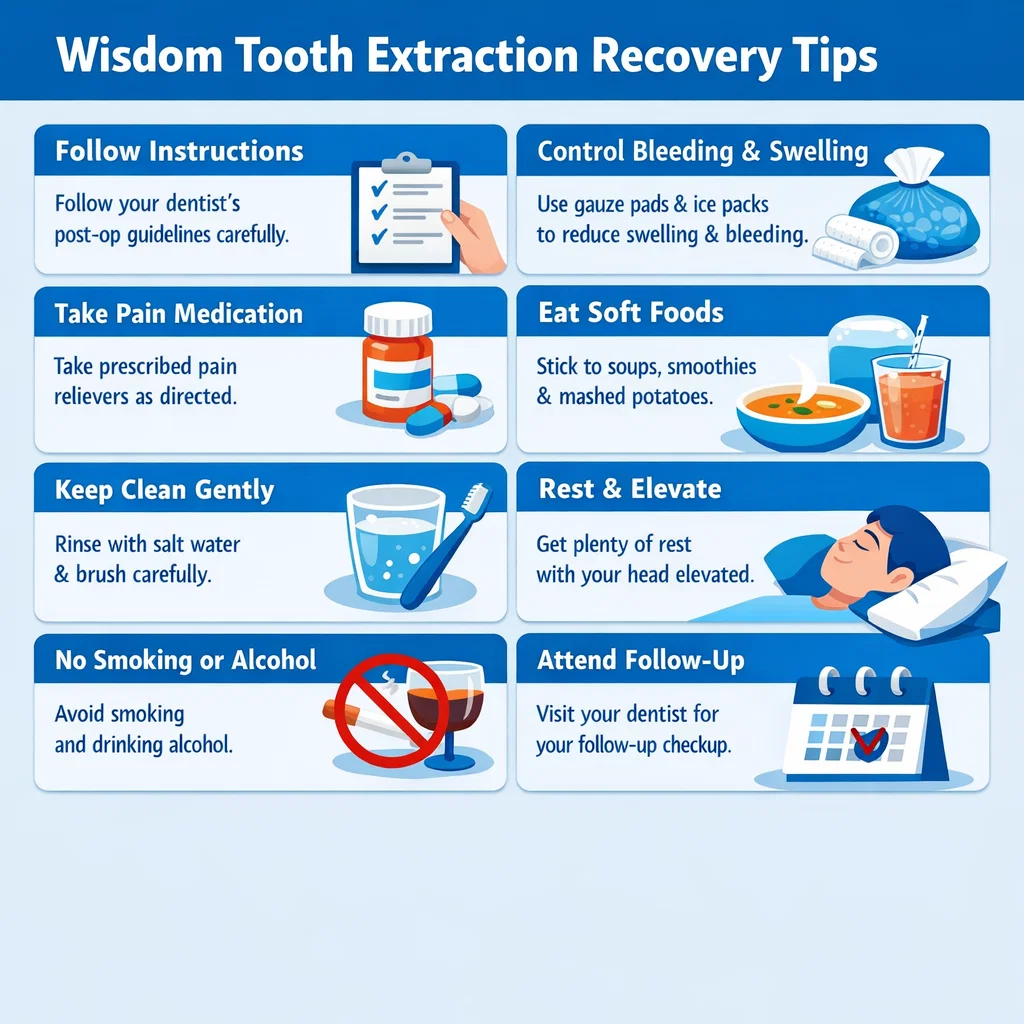
Your dentist will provide specific instructions after your tooth extraction. These instructions will facilitate healing and reduce pain. It’s vital to adhere to them exactly. Usually, these cover everything from what to eat and how to care for the area where teeth were extracted to when to take any prescriptions. Take heed of any follow-up appointments to be sure the site is healing properly.
2. Manage Bleeding and Swelling
You might have some bleeding and swelling after extraction. Bleeding will usually stop after a few hours, but you should bite down firmly on gauze pads to help soak up blood and promote clotting. If bleeding does not stop after 24 hours, call your dentist.
Swelling may appear, too, peaking around the second day post-op. Applying ice packs to the outside of the cheek in 15-20-minute intervals every hour for the first 48 hours will help minimize swelling. Never put ice directly on your skin; always cover it with a cloth.
3. Take Pain Relief as Directed
For most people, tooth extraction often causes some pain. If your pain is extreme, your dentist may suggest over-the-counter pain medication or write you a prescription for something stronger. Taking the medication as prescribed is important to keep pain at bay and avoid complications. Wait until the pain is horrific, which is why taking medicine after a certain period helps in managing the pain.
4. Stick to Soft Foods
In the first few days after your tooth is removed, you should eat soft foods such as mashed potatoes, soup, smoothies, and yogurt. Refrain from anything crunchy or chewy; these foods may irritate the extraction site or even become lodged in healing tissue. Avoid very hot foods or drinks during the first few days to not aggravate the wound.
Drinking plenty of fluids is also essential, but avoid using straws. Suction from a straw can dislodge the blood clot that forms at an extraction site, creating complications such as dry socket, which can be quite painful.
5. Maintain Oral Hygiene But Be Gentle
Though keeping good oral hygiene is recommended, being gentle after tooth extraction is necessary, too. Brushing your teeth is crucial, but don’t do it near the extraction site for 24 hours. Then lightly brush the affected area with a soft-bristle toothbrush. Do not rinse vigorously, because this can dislodge the blood clot and delay healing. Instead, you can start gently rinsing your mouth with salt water every few hours, starting about 24 hours after surgery, to keep the area clean.
6. Get Plenty of Rest
Sleep plays an important role in recovery. You may find yourself groggy from the anesthesia, so take it easy for a few days. Do not perform any heavy lifting or strenuous activity for 24 to 48 hours to give your body the best opportunity to heal. Another tip to help decrease swelling is to keep your head elevated when you’re lying down.
7. Avoid Smoking and Alcohol
Finally, both smoking and alcohol are known to decrease the rate of healing. Smoking, for example, can increase the risk of a painful condition called dry socket, which happens when the blood clot is dislodged. Avoid smoking for at least 72 hours after the procedure if possible. Alcohol can also irritate the extraction site, so avoiding drinking alcohol for a few days is also a smart idea.
8. Contact Your Clearwater Dentist for Follow-Up
You’ll likely have a follow-up appointment after your wisdom teeth removal or other tooth extraction to check in on you. This plays a vital role in your recovery process. Should your dentist find anything to be concerned about or complications during the follow-up visit, they’ll advise you on the next steps.
Following these important strategies will ensure that your recovery period after teeth extraction goes as smoothly and comfortably as possible. Remember that everyone heals differently, but with proper care, you can return to your normal routine relatively quickly.
Take the First Step Toward a Quick Recovery
When you know the proper aftercare steps, recovering from wisdom tooth removal is quite simple. With some guidance, a little patience, and attention to recovery, you’ll get back to your normal routine before long.
For professional tooth extraction and other dental needs in Clearwater, look no further than The Dentist Place of Clearwater. Don’t wait, give us a call to book your appointment today. Our team is just a phone call away to walk you through the healing process. Our priority is to ensure you receive the best possible care for a swift, straightforward recovery!
Questions People Ask About Tooth Extraction
1. How long does it take to recover from a wisdom tooth extraction?
Recovery time typically takes 1 to 2 weeks. Swelling and discomfort may peak within the first few days but gradually subside as you follow proper aftercare instructions to ensure a smooth healing process.
2. Can I eat solid foods after a tooth extraction?
It’s best to stick to soft foods and liquids for the first few days. Avoid solid foods that can irritate the extraction site, such as crunchy or chewy items, to promote proper healing and prevent complications.
3. How can I reduce swelling after a tooth extraction?
Applying an ice pack to your cheek for 15-20 minute intervals during the first 48 hours can help reduce swelling. Be sure to follow your dentist’s instructions for the best results and to minimize discomfort.
4. What should I avoid after tooth extraction?
Avoid smoking, drinking through straws, and consuming alcohol for several days after extraction. These actions can disrupt the healing process and increase the risk of complications like dry socket or infection.
5. Is it normal to have a bad taste in my mouth after tooth extraction?
Yes, bad taste can occur during the healing process. It’s important to gently rinse with salt water to keep the extraction site clean and avoid food or bacteria buildup, which can cause discomfort or infection.
6. When should I call my dentist after a tooth extraction?
Contact your dentist if you feel severe pain, unusual bleeding, fever, or any signs of infection. Prompt action ensures any complications are addressed, helping you heal more effectively and avoid long-term issues.