Same day appointments Available | $99 New Patient Special Includes Exam and X-rays

By The Dentist Place of Clearwater | March 18, 2026
When a sudden spot or sore develops in your mouth that seems reluctant to go away, it can be distressing. You may be wondering if it’s just a slight annoyance or an issue that needs to be addressed immediately. Though many mouth spots pose no threat to oral health, others could be early indicators of something more sinister, like oral cancer. Being able to time your actions well could help you a lot with regard to your health.
Detecting oral health problems at an early stage is essential to their prevention and treatment before they become problematic. Oral cancer screenings aim to detect potential issues early, when the chances of successful treatment are highest. If you have observed a nagging spot in your mouth that won’t heal or just seems unusual, then it’s time to think about getting a professional evaluation.
Why Should You Be Concerned About Persistent Mouth Spots?
There are several reasons mouth sores can develop. They are often harmless and can be caused by things like biting the inside of your cheek or irritation from a dental appliance. However, if a mouth spot doesn’t go away after a couple of weeks or changes in appearance, then consider talking to someone. That’s particularly true if the spot is painless or doesn’t respond to standard treatments. It can be an indication of a more serious issue, which should be addressed sooner rather than later.
Even though oral cancer is not as prevalent in comparison to others, it is one of the deadliest types of cancer if left untreated. It generally begins as a small, invisible lesion or ulcer inside the mouth. By the time symptoms like pain or trouble swallowing develop, cancer may have spread. But early diagnosis means a far better chance of successful treatment, making it a critical aspect of maintaining oral health.
Do You Need an Oral Cancer Screening?
If you have a recurring mouth stain that won’t go away or change, it may be time for an oral cancer screening. Regular screenings ensure that any potential concerns are caught early, providing peace of mind and timely treatment.
Here’s when oral cancer screening is recommended:
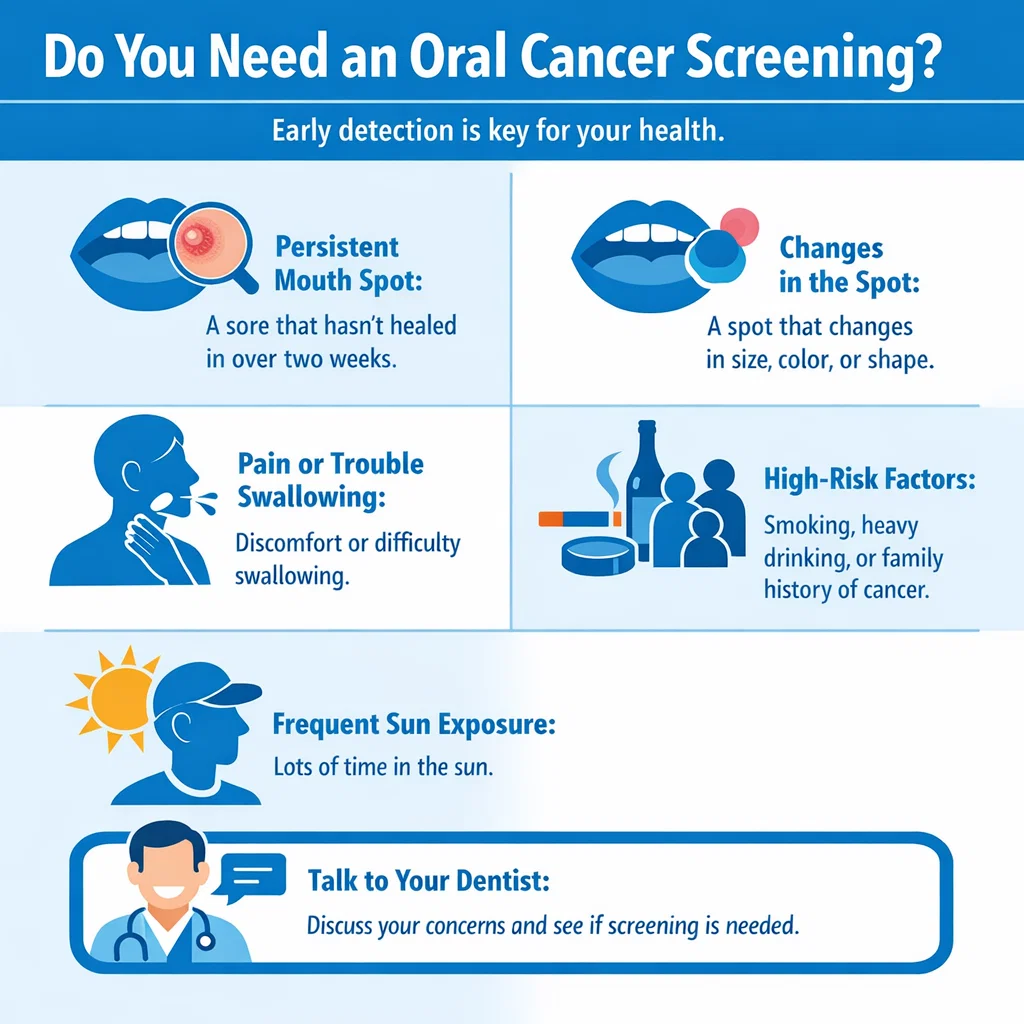
- Persistent Mouth Spot: A mouth spot that has not healed after two weeks should be evaluated to rule out serious conditions.
- Visible Changes in the Spot: If a mouth spot changes in size, color, or shape, it’s worth getting checked.
- Pain or Hard to Swallow: If the spot hurts, causes discomfort, or makes it hard to swallow, you might need a professional review.
- High-Risk Factors: If you smoke, drink heavily, or have a family history of cancer, having regular screenings becomes all the more important.
- Frequent Sun Exposure: Individuals who receive frequent sun exposure have a higher risk for oral cancer, which is why screenings are important.
Talk to your dentist about your worries and whether it’s time for tests, taking into account your health history and risks.
Symptoms That a Mouth Spot Could Be Serious
It can be difficult to know when a mouth spot is benign and when it might need professional attention. There are a few clear predictors to watch for that could signal something far more severe:
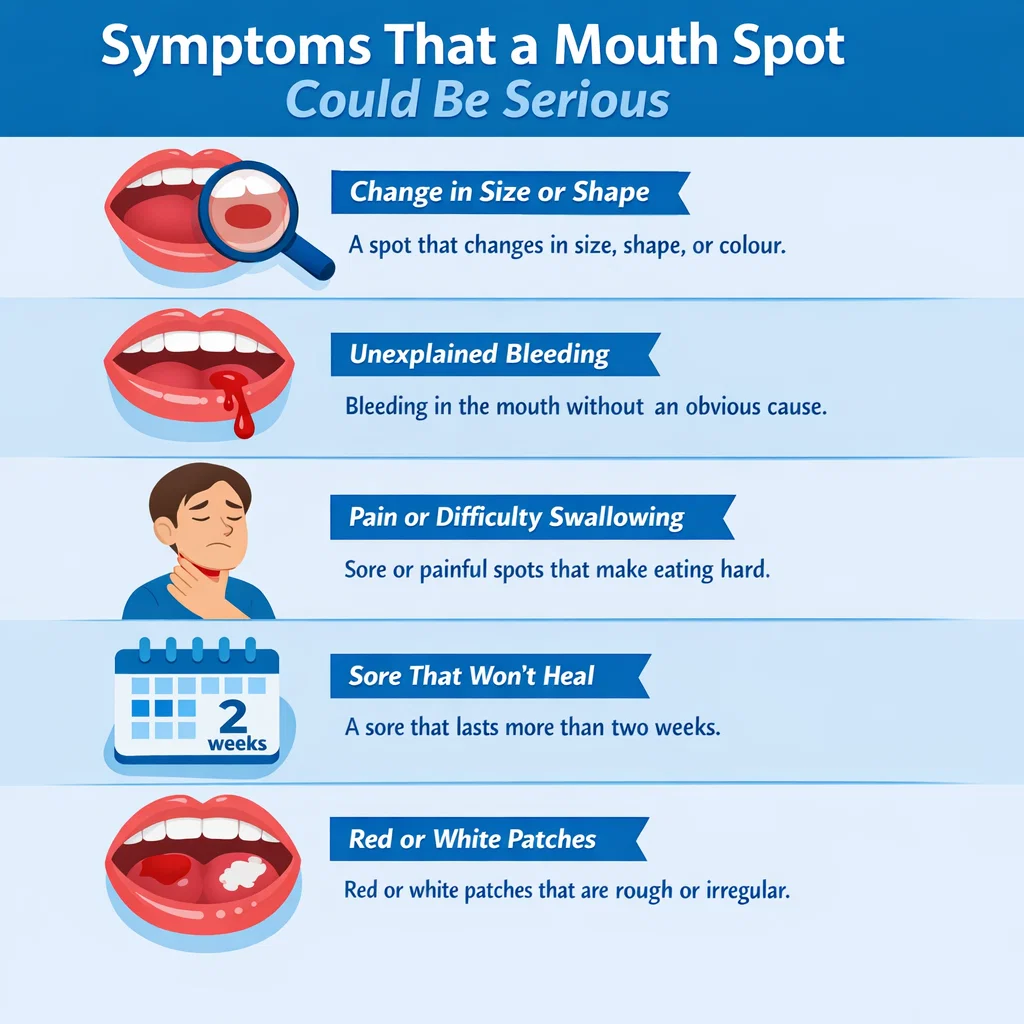
- Change in Size and Shape: A spot that changes in size, shape, or colour over time can be concerning.
- Bleeding: Any area in the mouth that bleeds without an obvious cause or that continues to bleed should be examined.
- Bleeding or Discomfort: If the spot hurts, especially while eating, or impedes swallowing, a professional examination may be needed.
- Persistent Sores: If a spot in your mouth doesn’t heal after two weeks or keeps coming back, get it checked.
- Red or White Patches: It is highly likely that if you have a patch that is red or even white, with rough edges, there will be an issue.
Although many of these signs do not indicate cancer, they can alert you to other dental problems that should be addressed. An oral cancer screening in Clearwater can detect the issue and guide you toward appropriate treatment.
How the Screening Process Works
Oral cancer screenings are a quick, painless part of your routine dental exam. The dentist will first do a visual examination of your mouth, looking for abnormal areas, sores, or lesions. They might also palpate your jaw and neck for any unusual bumps or lumps. If anything of concern is found, additional tests might be warranted, such as a biopsy or imaging scans, to diagnose the root cause.
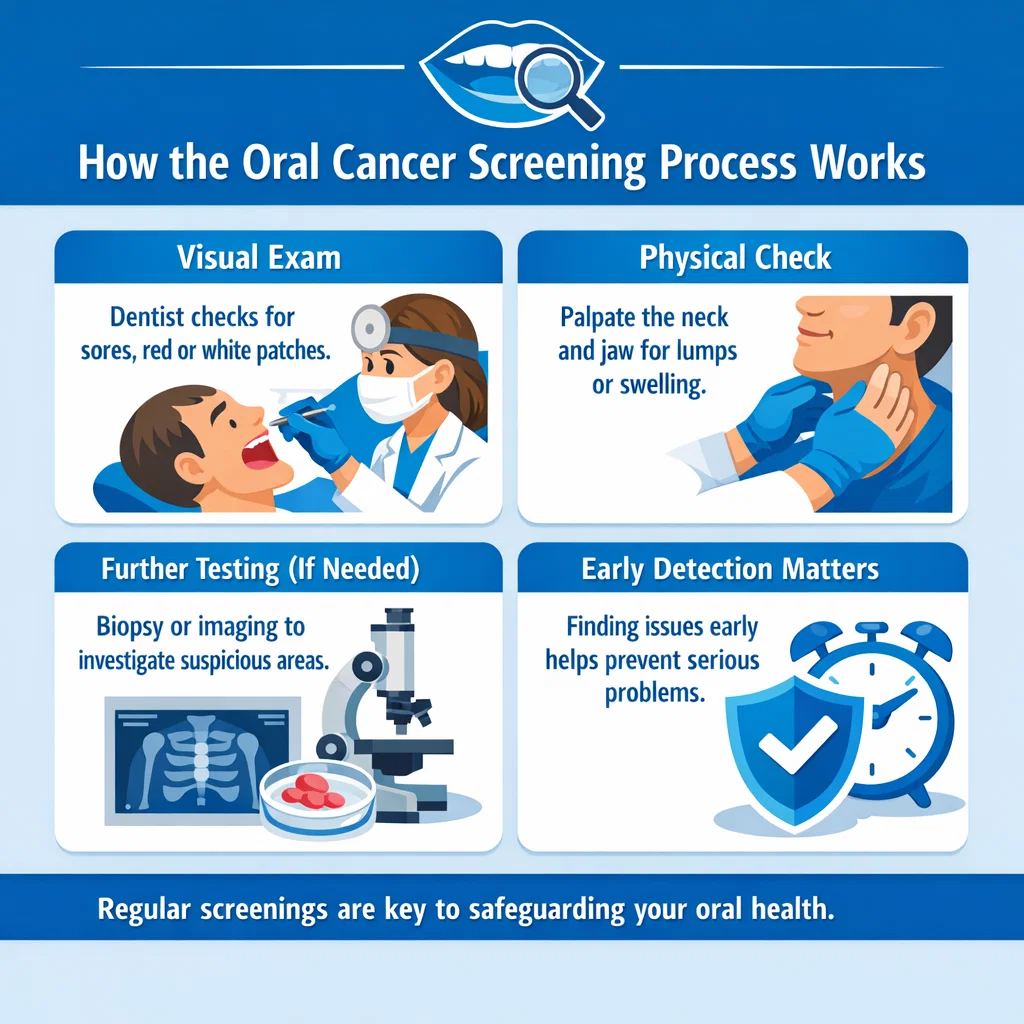
Oral cancer screenings are very quick and non-invasive in most cases. Regular screenings are an integral part of keeping ahead of any potential oral health issues for at-risk patients. Detecting potential concerns early can ensure they are resolved before becoming more serious.
Why You Should Have Routine Oral Cancer Screenings
Oral cancer screenings are important for your oral health and catching problems before they grow into bigger issues. Early detection of oral cancer is crucial for successful treatment and recovery. Here’s why you should get screened regularly:
- Save Your Life: You can treat oral cancer early if it is detected. Routine screenings catch potential concerns before they turn life-threatening.
- Straightforward and Easy to Undergo: The screening procedure is straightforward, harmless, and can be performed during your dental checkup, making it easy to include in your schedule.
- Protective Fix: Regular screenings give your dentist a chance to check your mouth regularly and detect any anomalies, so that small issues don’t become big problems.
- Peace of Mind: Seeing a professional for signs of oral cancer offers peace of mind, particularly if you’ve noticed something different going on in your mouth that doesn’t seem to go away.
- Detecting Other Oral Health Problems: In addition to cancer, oral cavity cancer screenings can also detect other problems, such as gum diseases or infections that might compromise your overall oral health.
Regular oral cancer screenings are a step in the right direction toward preventive dental health and overall wellness. Be sure to talk with your dentist about how frequently screenings should occur based on your risk factors.
Take Care of Your Health: Schedule an Oral Cancer Screening
If you have a suspicious mouth spot or any other oral health issues, don’t hesitate to get examined. Early detection is one of the best weapons you have to secure your health. Getting an oral cancer screening in Clearwater does not take much time, but it can flag anything that looks suspicious and bring you the comfort you need.
The Dentist Place of Clearwater can help you with regular screenings and keep your gums in check. Don’t hesitate to call us if you have any questions or need to schedule your next screening. We are also dedicated to helping you preserve your oral health for a lifetime.
Questions People Ask About Oral Cancer Screening
What is an oral cancer screening?
An oral cancer screening is a quick, non-invasive exam in which your dentist checks for unusual spots, sores, or lumps in your mouth that could indicate oral cancer or other oral health concerns, helping ensure early detection and treatment.
How long should a mouth spot last before it’s concerning?
A mouth spot that doesn’t heal within two weeks should be checked by a dentist. Persistent spots or changes in size, color, or texture can signal a potential problem, including oral cancer, requiring further examination for safety.
What are the common symptoms of oral cancer?
Common oral cancer symptoms include persistent mouth sores, lumps, white or red patches, difficulty swallowing, or pain when chewing. If any of these symptoms last longer than two weeks, seek a professional evaluation for early detection.
Who should get an oral cancer screening?
Anyone can benefit from an oral cancer screening, especially individuals with higher risk factors, like tobacco users, heavy drinkers, or those with a family history of cancer. Regular screenings help detect potential issues early, leading to better outcomes.
How often should I get an oral cancer screening?
The frequency of oral cancer screenings depends on your individual risk factors. Generally, it’s recommended annually, but those with higher risk may need more frequent screenings. Consult your dentist to determine the best schedule for you.
Is an oral cancer screening painful?
No, oral cancer screenings are non-invasive and pain-free. The dentist simply examines your mouth and neck for abnormalities, offering a quick, thorough check-up that can help detect issues early without causing any discomfort.