Same day appointments Available | $99 New Patient Special Includes Exam and X-rays


By The Dentist Place of Clearwater | April 3, 2026
Dental emergencies, by their very nature, do not tend to come at the most convenient time. Whether it’s a painful toothache that strikes unexpectedly or you’ve chipped a tooth in an accident and need to see a professional quickly, there is never any downtime with an emergency. What you choose to do immediately after the incident can even save the tooth or, in very extreme cases, your life, depending on what has happened.
Here in Clearwater, dental emergencies are far more common than most realize, and seeking help fast can be key. In an emergency, it’s crucial to remain calm and take the appropriate action. This blog will explain a variety of common dental emergencies and how to act in those important few minutes before you see a dentist near you.
Common Dental Emergencies & What To Do
Dental emergencies tend to happen when least expected and, at first, can be quite panic-inducing. Having the right information and staying calm, however, can help in managing the situation effectively. Some common dental emergencies and how you can handle them are as follows:
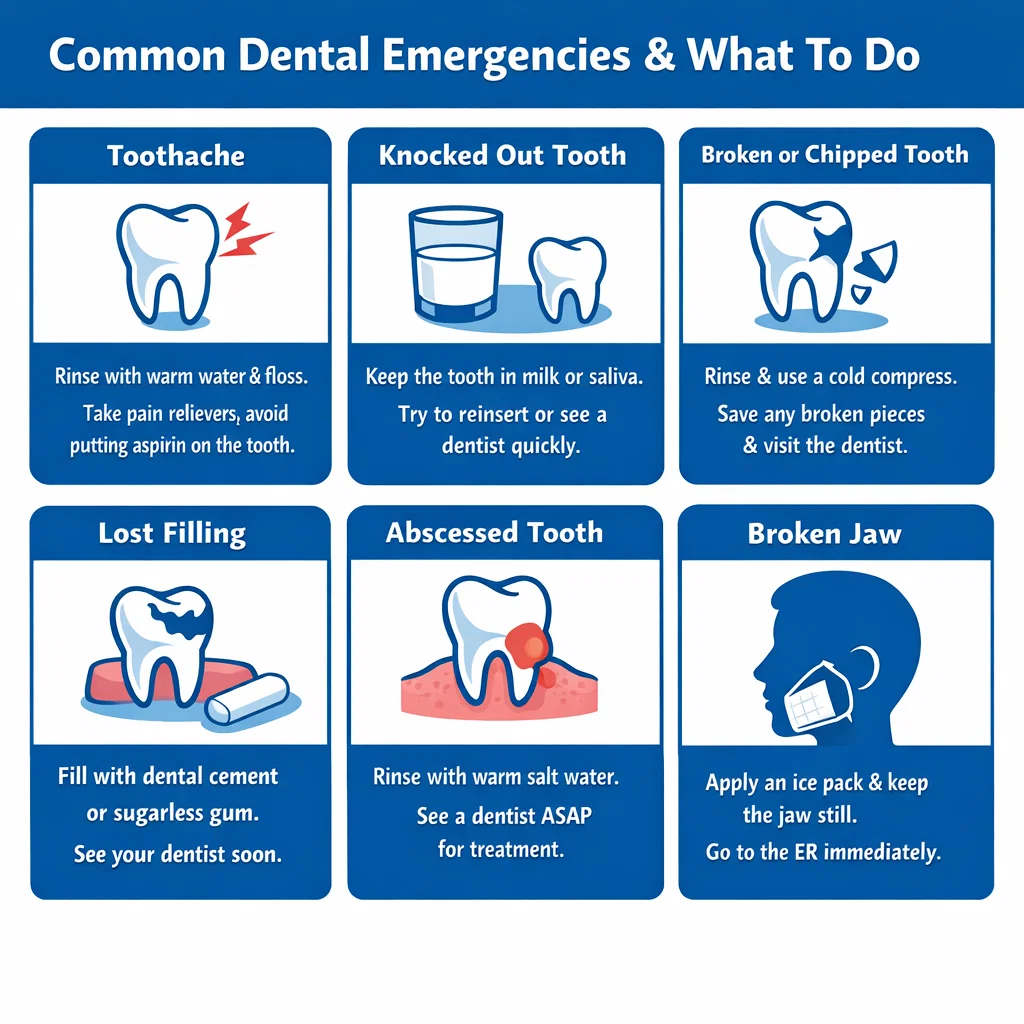
1. Toothache
Toothaches are among the most common dental emergencies and can range from mild discomfort to an acute throbbing pain, depending on the cause. Cavities, infections, or a fractured tooth can all be contributing factors.
What to do: Rinse your mouth with warm water, and use dental floss to remove any foreign bodies from between your teeth that may be causing irritation. Pain relievers available at any pharmacy will help ease your discomfort until you can see a dentist, but avoid putting aspirin directly on your tooth, as it may burn the tissue.
2. Knocked Out Tooth
This is a serious emergency where the first few minutes after the accident are critical for saving the tooth.
What to do: Gently hold the tooth by its crown (the visible part) and, if it’s dirty, rinse it quickly in cool water; don’t scrub it. If you can find the socket the tooth came from, you could try to place it back in the mouth. If you cannot put it back, hold the tooth in a glass of milk or saliva to keep it moist until you see an emergency dentist.
3. Broken Or Chipped Tooth
A broken or chipped tooth, usually caused by trauma to the tooth or chewing something too hard, may not necessarily cause any pain, but it can spoil your smile and may cause damage.
What to do: In severe cases of a broken tooth, applying cold compresses may help reduce swelling. Collect any broken pieces of the tooth and take them to the dentist, who may repair the tooth using bonding techniques or fit a crown. Any bleeding should be controlled by applying gentle pressure with a clean cloth.
4. Lost Or Loose Filling
A loose or lost filling is not an emergency in the way a knocked-out tooth is, though it can cause discomfort. Once the tooth is no longer protected, it becomes more vulnerable to damage or infection.
What to do: A temporarily lost or loose filling can be covered with dental filling cement or a piece of sugarless gum to protect the exposed tooth; you should visit the dentist soon.
5. Abscessed Tooth
This is often the result of an untreated cavity and can cause significant pain because it usually affects the tissue surrounding the tooth root. The infection, if left untreated, may affect other parts of the body.
What to do: Swish your mouth out with warm salt water; this can sometimes help ease any pain. Pain relievers available from your local pharmacy will help ease your discomfort, though you should visit a dentist immediately in case they prescribe an antibiotic or suggest root canal therapy to remove the infection and fill the tooth.
6. Broken Jaw
This is more of a severe dental emergency, which must be dealt with immediately and is sometimes associated with serious blood loss or difficulty breathing.
What to do: Place an ice pack on your jaw to reduce any swelling and use a clean cloth if there is any blood. Don’t try to relocate the broken jaw, and ensure that you are seen by a doctor as soon as possible.
When Should You See an Emergency Dentist?
You need to be clear about what constitutes a dental emergency so that you are not increasing complications. Here are a few dental health conditions that could definitely warrant an emergency dental visit:
- Extreme Toothache: A toothache that doesn’t subside can be more than an inconvenience. It could indicate an infection or a damaged tooth and may require an urgent dental examination.
- Heavy Bleeding: A situation where you can’t stop bleeding from your teeth or gums, even with pressure. It is crucial to contact a dentist right away, as the issue will be managed appropriately and no possible complications will arise.
- Knocked-Out Tooth: When you have a knocked-out tooth and have been told that you can still put it back in its place in a limited amount of time, you should call a dentist as soon as possible. This is something to do if you want it to survive. Ensure you collect it carefully, and keep it in water; then, head to the dentist.
- Oral/Jaw/Facial Injury: You must have dental attention as soon as possible if there is swelling or substantial pain from injury to your jaw, mouth, or face. This could be much worse than it appears and needs a professional.
- Signs of Infection: This can result from damage to a tooth, and symptoms may include facial pain or swelling and a fever. The signs of infection are important, and the earlier it can be checked, the less likely it is to spread. If you notice any sign of infection, you need to contact your emergency dentist.
How Can You Avoid Dental Emergencies?
Although many dental emergencies cannot be foreseen, you can protect yourself by taking several proactive steps to lessen the chance of one. Simply maintaining a good oral care routine and visiting your dentist can help you avoid emergencies and keep you smiling. Here are the steps you can take:
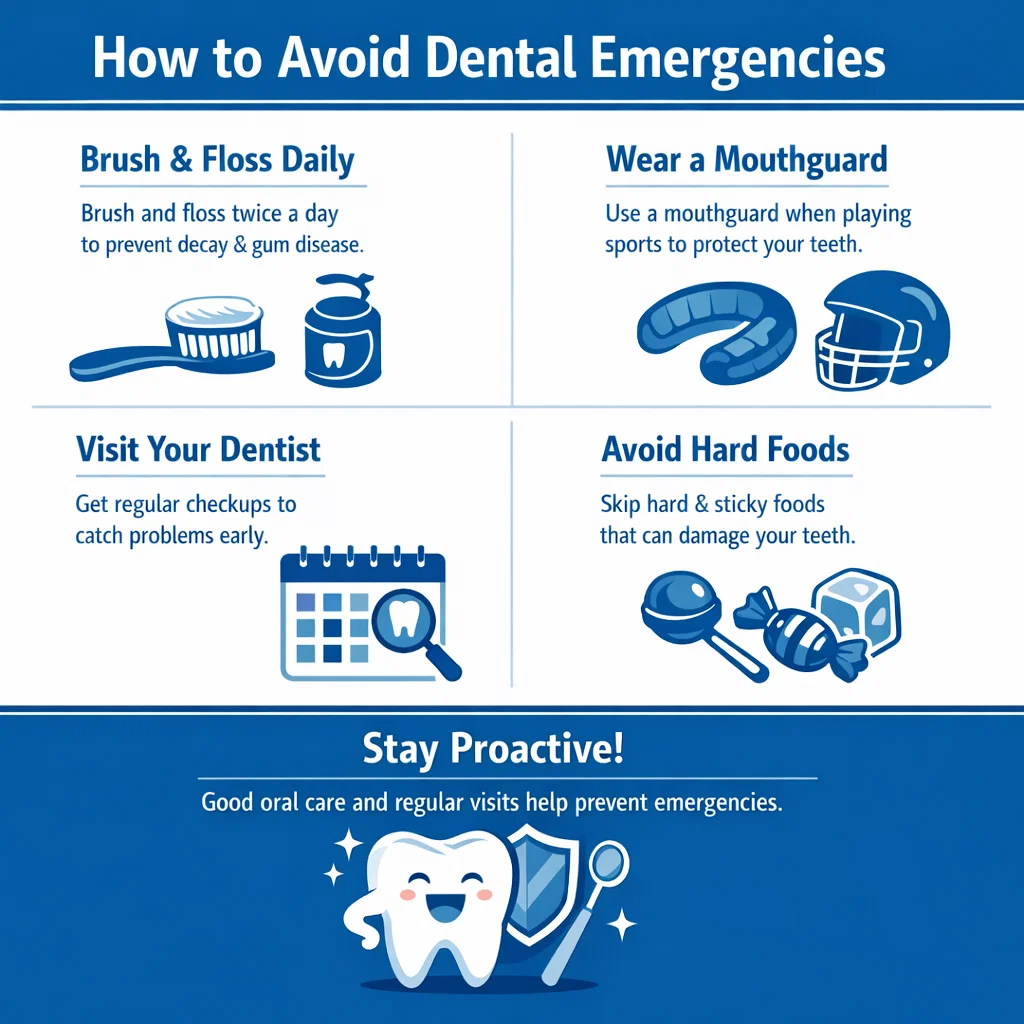
- Brush and Floss Twice a Day: Brushing your teeth twice daily with fluoride toothpaste and flossing helps remove unwanted food particles and plaque from between your teeth. This keeps decay and gum disease at bay, both of which can lead to emergencies.
- Wear a Mouthguard in Sports: You should wear a mouthguard during any physical sport to protect your teeth from knocks and injuries. A mouthguard can be a lifesaver when it comes to damaged or lost teeth.
- Have Regular Checkups: Your regular trips to the dentist ensure that any emerging dental problems are spotted and treated before they escalate into emergencies, which are harder and more costly to deal with!
- Avoid Hard or Sticky Foods: Hard or sticky foods like hard candies, ice, and chewy caramels can chip or break your teeth, so avoiding them helps keep your teeth safe.
Taking these simple steps will prevent many of the risks that lead to the need for emergency dental treatment.
Act Fast to Protect Your Smile
Dental emergencies can be frightening, but knowing what to do can help you stay calm and take control of the situation. Whether it’s a sudden toothache, a broken tooth, or a knocked-out tooth, quick action can often prevent further damage and reduce your pain.
If you are facing a dental emergency, don’t wait; reach out to The Dentist Place of Clearwater today. Our dedicated team is here to provide the urgent care you need, offering professional and compassionate services when it matters most.
Questions People Ask About Dental Emergencies
1. What should I do if I chip a tooth?
Rinse your mouth with warm water and apply a cold compress to reduce swelling. Save any tooth fragments and visit an emergency dentist to prevent infection and further damage. Timely care can restore your tooth’s function.
2. How can I manage a toothache at home?
Rinse the area with warm salt water to clean it, and use over-the-counter pain relievers to ease discomfort. Avoid applying aspirin directly to the tooth, as it can harm the gums. Visit your dentist for a thorough evaluation.
3. What is the first step if I lose a tooth?
Try to place the tooth back into its socket if possible. If not, store it in milk or saliva and get to an emergency dentist immediately. Prompt action increases the chances of saving the tooth.
4. Can a broken tooth heal on its own?
No, a broken tooth requires professional care to prevent further damage or infection. Schedule an emergency dental visit to evaluate the extent of the break and receive appropriate treatment, like bonding or a crown.
5. How do I treat an abscessed tooth at home?
Rinse with warm salt water to alleviate pain and reduce swelling. However, an abscess requires professional treatment, often involving antibiotics or a root canal. See your dentist promptly to avoid serious complications.
6. What should I do if I have a swollen jaw?
Apply a cold compress to reduce swelling and seek immediate medical care. Jaw swelling could indicate an infection or injury that needs urgent attention, and delaying treatment may lead to further complications. Visit your dentist right away.