Same day appointments Available | $99 New Patient Special Includes Exam and X-rays

By The Dentist Place of Clearwater | April 16, 2026
Let’s be honest—most of us have been brushing our teeth the same way for years without ever questioning it. But here’s the catch: brushing daily isn’t enough if you’re not doing it correctly. The right technique can mean the difference between a healthy smile and recurring dental problems.
At The Dentist Place of Clearwater, we often meet patients who brush twice a day but still struggle with cavities, gum irritation, or bad breath. The reason? Technique matters just as much as consistency.
Let’s break it down into simple, actionable steps you can start using today.
Why Proper Brushing Matters
Your mouth is home to millions of bacteria. When not removed effectively, they form plaque—a sticky film that leads to tooth decay and gum disease. Brushing the right way helps:
- Remove plaque and food particles
- Prevent cavities and gum disease
- Keep your breath fresh
- Maintain a bright, confident smile
In a coastal city like Clearwater, where life often includes beach outings, dining out, and social gatherings, your smile plays a big role in your confidence.
Step-by-Step: The Right Way to Brush Your Teeth
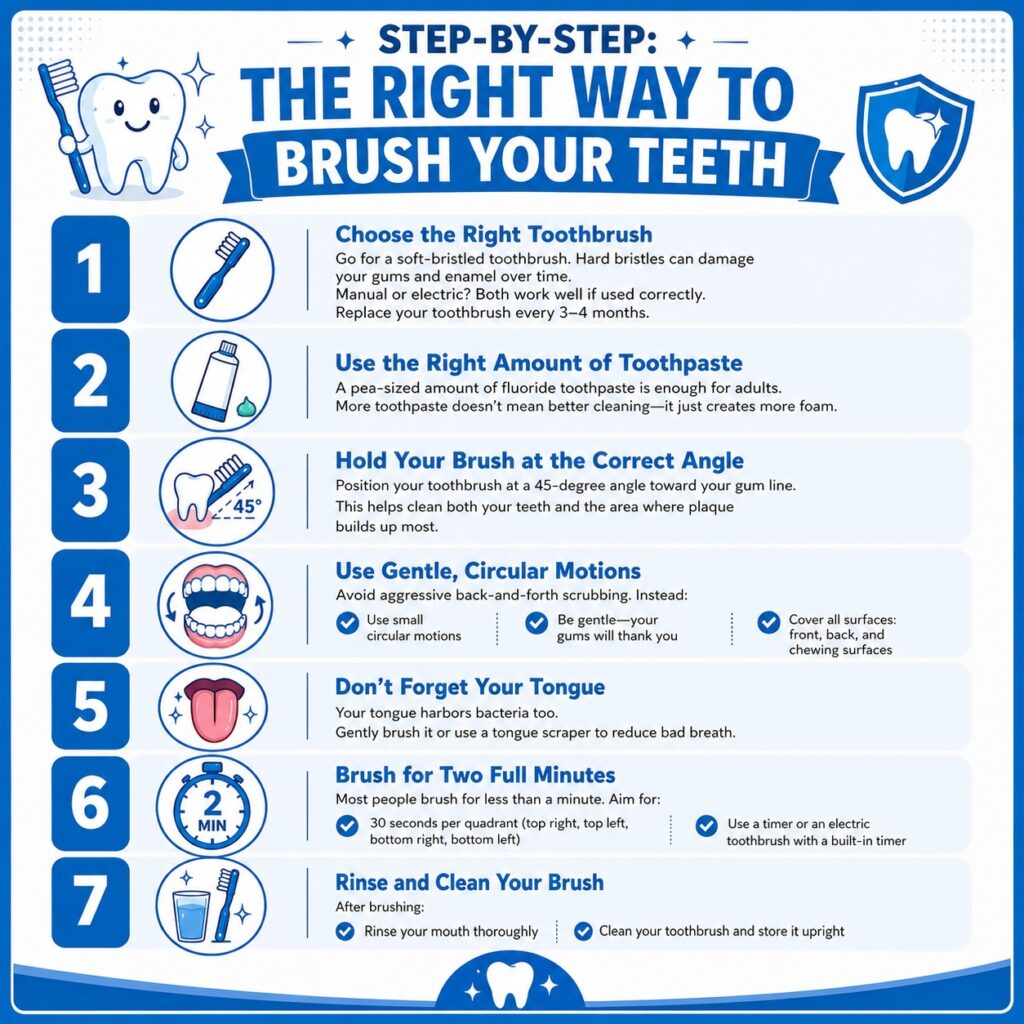
1. Choose the Right Toothbrush
Go for a soft-bristled toothbrush. Hard bristles can damage your gums and enamel over time.
- Manual or electric? Both work well if used correctly
- Replace your toothbrush every 3–4 months
2. Use the Right Amount of Toothpaste
A pea-sized amount of fluoride toothpaste is enough for adults. More toothpaste doesn’t mean better cleaning—it just creates more foam.
3. Hold Your Brush at the Correct Angle
Position your toothbrush at a 45-degree angle toward your gum line. This helps clean both your teeth and the area where plaque builds up most.
4. Use Gentle, Circular Motions
Avoid aggressive back-and-forth scrubbing. Instead:
- Use small circular motions
- Be gentle—your gums will thank you
- Cover all surfaces: front, back, and chewing surfaces
5. Don’t Forget Your Tongue
Your tongue harbors bacteria too. Gently brush it or use a tongue scraper to reduce bad breath.
6. Brush for Two Full Minutes
Most people brush for less than a minute. Aim for:
- 30 seconds per quadrant (top right, top left, bottom right, bottom left)
- Use a timer or an electric toothbrush with a built-in timer
7. Rinse and Clean Your Brush
After brushing:
- Rinse your mouth thoroughly
- Clean your toothbrush and store it upright
Common Brushing Mistakes to Avoid
Even with the best intentions, small mistakes can harm your oral health:
- Brushing too hard
- Using a worn-out toothbrush
- Skipping nighttime brushing
- Ignoring the gum line
- Rushing through the process
If you’re unsure whether you’re brushing correctly, a quick visit to a dental professional can make all the difference.
How Often Should You Brush?
- Twice a day is the minimum
- Brush once in the morning and once before bed
- Floss at least once daily for complete care
When to See a Dentist
Even with perfect brushing habits, regular dental visits are essential. You should schedule a checkup if:
- Your gums bleed while brushing
- You experience tooth sensitivity
- You have persistent bad breath
- It’s been over 6 months since your last visit
At The Dentist Place of Clearwater, we provide personalized guidance to help you improve your brushing technique and maintain long-term oral health.
Quick Brushing Checklist
- Soft-bristled toothbrush
- Pea-sized toothpaste
- 45-degree angle
- Gentle circular motions
- Two minutes total
- Don’t skip your tongue
Stick this checklist near your bathroom mirror—it’s a small reminder that can lead to big improvements.
Ready for a Healthier Smile?
Brushing your teeth the right way is one of the simplest yet most powerful habits you can build. But sometimes, a professional touch is what truly keeps your smile in top shape.
If you’re in Clearwater and want expert guidance or a routine checkup, schedule your appointment with The Dentist Place of Clearwater today. Your smile deserves more than just routine—it deserves the right care.
Take the first step toward better oral health—book your appointment now and let your smile shine with confidence.
FAQs About Brushing Your Teeth
1. Is brushing harder better for cleaning?
No. Brushing too hard can damage enamel and irritate gums. Gentle brushing is more effective.
2. Should I brush before or after breakfast?
Ideally, brush before breakfast. If brushing after, wait at least 30 minutes—especially after acidic foods.
3. Are electric toothbrushes better?
They can be more effective for some people, especially those who struggle with proper technique.
4. How do I know if I’m brushing correctly?
If your gums don’t bleed and your teeth feel clean without sensitivity, you’re likely on the right track. A dentist can confirm.
5. Can brushing alone prevent cavities?
Brushing helps, but you also need flossing, a healthy diet, and regular dental checkups.