Same day appointments Available | $99 New Patient Special Includes Exam and X-rays


By The Dentist Place of Clearwater | April 13, 2026
If you’ve ever looked in the mirror and noticed stubborn dark spots or dull, uneven enamel, you’re not alone. Many patients walk into The Dentist Place of Clearwater hoping that teeth whitening will solve all their smile concerns. But here’s the honest truth: whitening is powerful—but it’s not a cure-all.
Let’s break it down in a way that actually helps you decide what’s right for your smile.
What Teeth Whitening Really Does
Teeth whitening works by using safe bleaching agents (usually hydrogen peroxide or carbamide peroxide) to lift stains from the enamel. It’s incredibly effective for:
- Yellowing caused by coffee, tea, or wine
- Tobacco stains
- Age-related discoloration
- Surface-level staining from food and drinks
If your teeth look dull or slightly stained, teeth whitening can dramatically brighten your smile—often in just one visit.
But What About Dark Spots?
Here’s where expectations need to be realistic.
Whitening may help some dark spots—but not all.
Whitening can improve:
- Mild surface stains that appear as small dark patches
- Early discoloration from foods or poor oral hygiene
Whitening will NOT fix:
- Deep stains inside the tooth (intrinsic stains)
- Dark spots caused by cavities
- Discoloration from trauma or medication
In fact, whitening unevenly can sometimes make dark spots stand out more.
If you’re dealing with noticeable spots, a professional exam can determine the exact cause—and the right solution.
Can Whitening Repair Enamel Damage?
Short answer: No.
Whitening is cosmetic—it doesn’t rebuild or heal enamel.
Enamel damage may look like:
- Chalky white patches
- Rough or uneven tooth surfaces
- Sensitivity to hot or cold
- Visible wear or thinning
Whitening won’t fix these issues because enamel doesn’t regenerate. Once it’s damaged, it needs restorative or protective treatment, not just cosmetic improvement.
So What Does Fix These Problems?
If whitening alone isn’t enough, don’t worry—there are excellent alternatives.
For Dark Spots:
- Dental bonding – covers discoloration with tooth-colored resin
- Porcelain veneers – long-lasting, natural-looking solution
- Microabrasion – removes superficial enamel stains
For Enamel Damage:
- Fluoride treatments – strengthen weakened enamel
- Dental bonding or veneers – restore appearance and function
- Crowns (in severe cases) – protect heavily damaged teeth
A customized treatment plan often combines whitening with other cosmetic or restorative options for the best results.
Tips to Prevent Future Stains & Damage
Want your results to last? These simple habits go a long way:
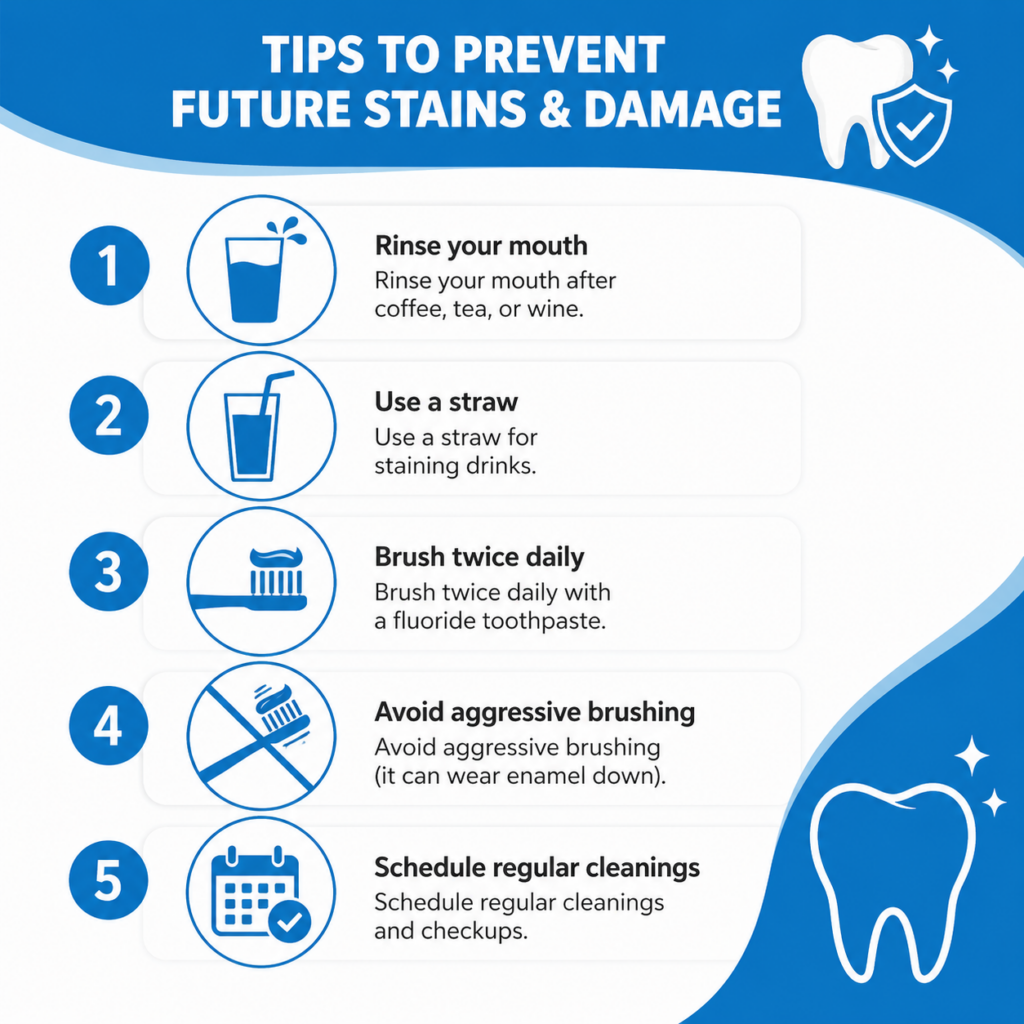
- Rinse your mouth after coffee, tea, or wine
- Use a straw for staining drinks
- Brush twice daily with a fluoride toothpaste
- Avoid aggressive brushing (it can wear enamel down)
- Schedule regular cleanings and checkups
Consistency matters more than perfection.
Professional Whitening vs. DIY Kits
It’s tempting to grab an over-the-counter kit, but there’s a clear difference:
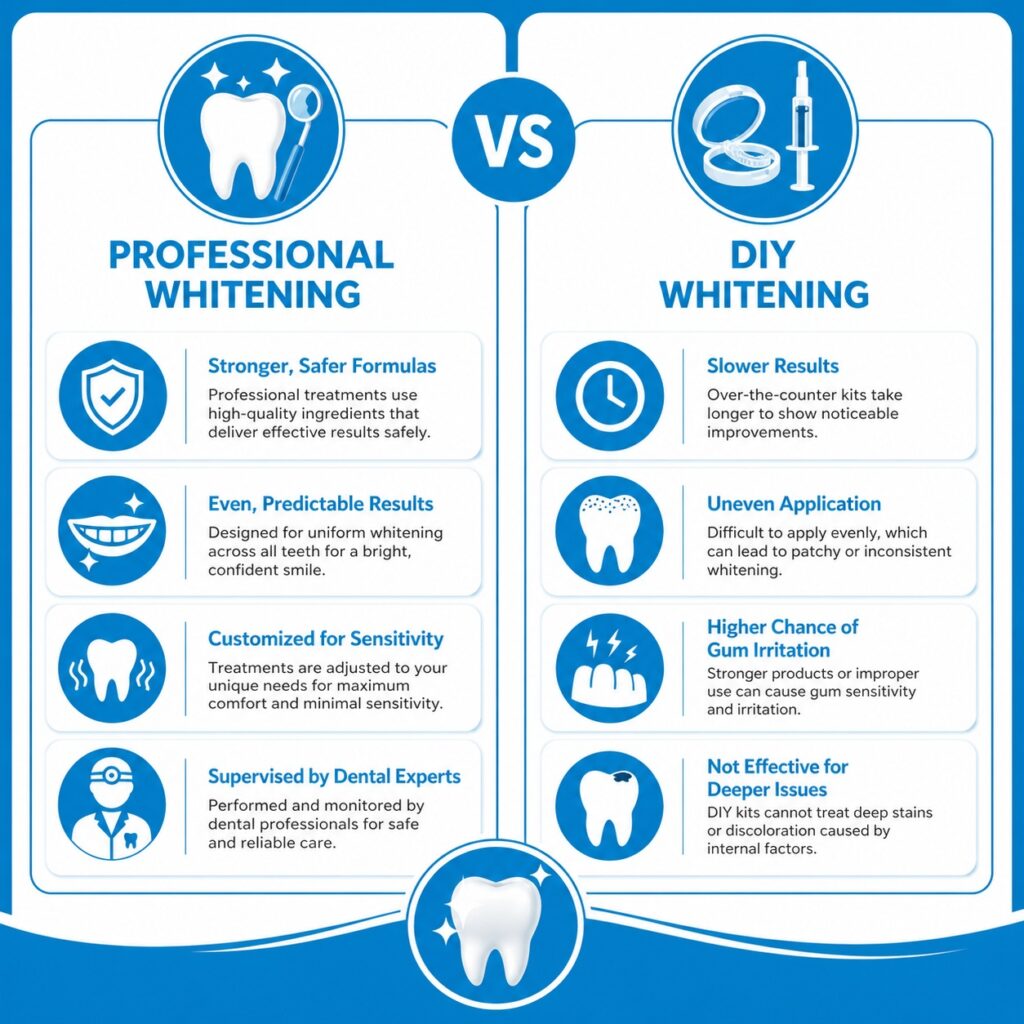
Professional Whitening:
- Stronger, safer formulas
- Even, predictable results
- Customized for sensitivity
- Supervised by dental experts
DIY Whitening:
- Slower results
- Uneven application
- Higher chance of gum irritation
- Not effective for deeper issues
If you already have enamel concerns or dark spots, professional care is especially important to avoid making things worse.
How Do You Know What You Need?
Here’s a quick self-check:
- General yellowing? Whitening could work great
- Spotty or uneven color? You may need additional cosmetic treatment
- Sensitivity or rough enamel? Focus on repair before whitening
Still unsure? That’s exactly what consultations are for.
Why Choose The Dentist Place of Clearwater?
At The Dentist Place of Clearwater, treatment isn’t one-size-fits-all. Every smile is evaluated carefully to determine:
- The cause of discoloration
- The health of your enamel
- The safest and most effective treatment path
The goal isn’t just whiter teeth—it’s a healthier, more confident smile that lasts.
Final Thoughts
Teeth whitening is an excellent way to brighten your smile—but it’s not designed to fix everything. Dark spots and enamel damage often need targeted treatments for real, lasting results.
If your smile isn’t where you want it to be, the best next step is a professional evaluation.
Ready for a Brighter, Healthier Smile?
If you’re in Clearwater and wondering whether whitening is right for you, schedule a visit with The Dentist Place of Clearwater. A personalized approach can make all the difference—not just in how your smile looks, but how it feels.
Your best smile isn’t just whiter—it’s healthier, stronger, and made to last.
Frequently Asked Questions
1. Is teeth whitening safe for sensitive teeth?
It can be, especially when done professionally. Dentists adjust the strength and provide desensitizing solutions.
2. Can enamel grow back after damage?
No, enamel doesn’t regenerate. However, treatments can strengthen and protect what remains.
3. Should I whiten before or after fixing spots?
Usually after addressing underlying issues—but your dentist will guide the best sequence.