Same day appointments Available | $99 New Patient Special Includes Exam and X-rays

By The Dentist Place of Clearwater | March 20, 2026
You’re dealing with the strange, almost furry coating on your teeth for a long time. You’ve just finished brushing and rinsing your mouth, and things should feel fresh. But your teeth feel rough and coated, almost like they haven’t been cleaned at all. It’s frustrating, especially when you’re putting in the effort.
Here’s the thing most people don’t realize: that fuzzy texture isn’t just a minor annoyance. It’s your mouth signaling something worth paying attention to. The good news is that once you know what’s causing it, the fix is usually simple. So let’s get into it.
What Is That “Fuzzy” Feeling on Your Teeth?
The clinical term is dental plaque – a sticky, near-invisible film made up of bacteria, food particles, and proteins from your saliva. Your mouth starts producing plaque within minutes of eating or drinking. When it accumulates on tooth surfaces, your teeth can feel rough, coated, or “furred over.”
If you’re brushing but still noticing that texture afterward, the plaque isn’t being removed as thoroughly as it should be. A dentist can assess your technique, identify the problem areas in your mouth, and help you figure out what’s going wrong.
Six Reasons Your Teeth Still Feel Fuzzy After Brushing
1. Your Brushing Technique Is Wrong
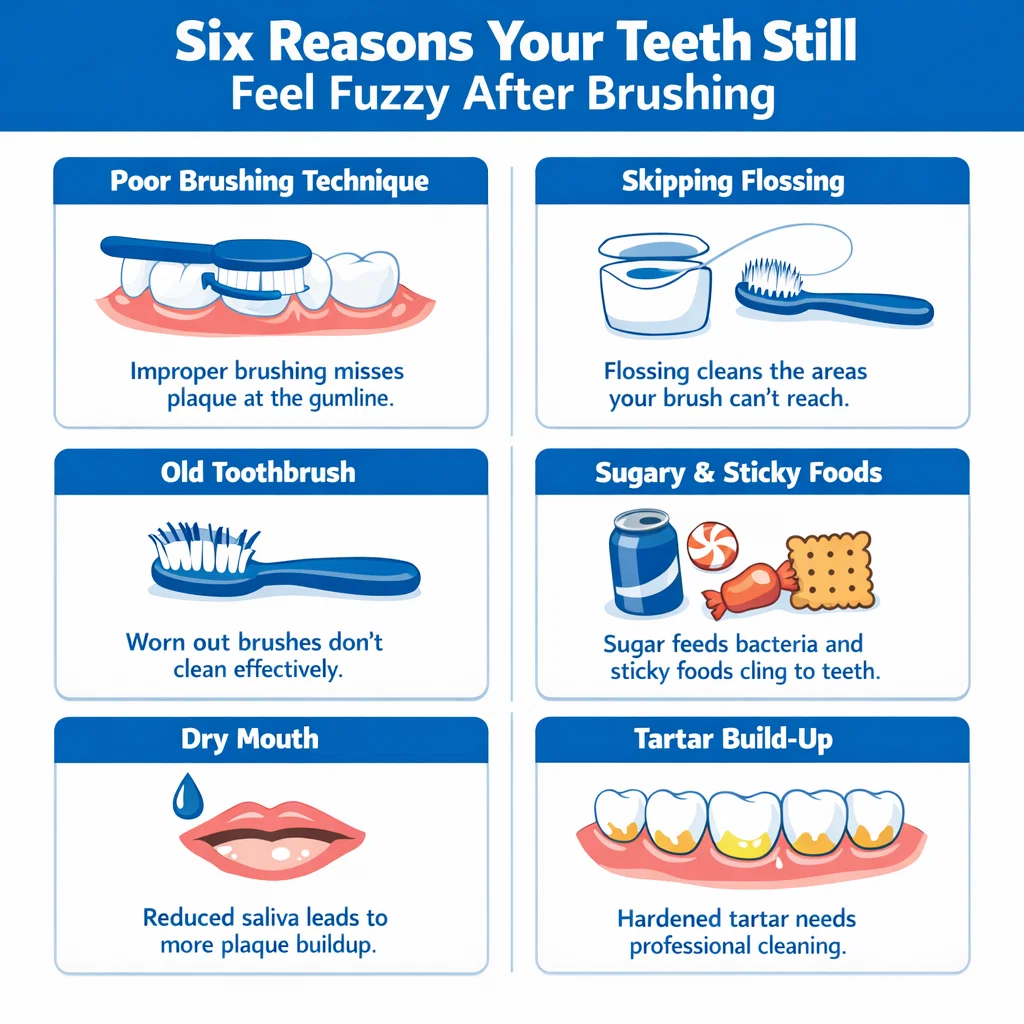
Brushing twice a day is essential, but it’s not the be-all and end-all. How you brush determines how much plaque gets removed. Scrubbing in long, horizontal strokes is one of the most common mistakes; it misses the spaces between your teeth and the area right at your gumline, where plaque builds up fastest.
A better approach: use gentle, small circular motions with your brush angled at about 45 degrees toward the gums. Cover the front, back, and chewing surfaces of every tooth, and spend at least two minutes. Most people spend about 45 seconds.
2. You’re Skipping Floss
Brushing alone cleans roughly 60% of your tooth surfaces. The other 40% (the tight contacts between your teeth) can only be reached with floss or an interdental cleaner. Plaque that’s left sitting in those gaps keeps building, no matter how well you brush everywhere else. Over time, that leads to a persistent, fuzzy, or gritty sensation you’re noticing.
If you’re not comfortable using traditional floss, a water flosser or an interdental brush works just as well for most people. The important thing is getting into those spaces every day.
3. Your Toothbrush Is Overdue for Replacement
Frayed, splayed bristles lose their flexibility and don’t make proper contact with tooth surfaces. They physically can’t dislodge plaque the way a fresh brush can. The American Dental Association recommends replacing your toothbrush every 3 to 4 months, or sooner if the bristles look worn or bent. If you can’t remember when you last replaced yours, it’s probably time to buy a new one.
4. Your Diet Is Feeding the Bacteria
Bacteria in your mouth thrive on sugar and refined carbohydrates. When they digest these substances, they produce acids and a thick biofilm (the coating that makes your teeth feel unpleasant even after brushing). Sticky foods like crackers, chips, dried fruit, and candy cling to tooth surfaces for hours, giving bacteria more time to feed and multiply between brushings.
Drinking water throughout the day and rinsing after meals can help flush residue away before it contributes to buildup. It’s a small habit that makes a real difference.
5. Dry Mouth Is Working Against You
Saliva does more than most people give it credit for. It neutralizes acid, washes food particles off your teeth, and keeps the bacterial population in check. When saliva production drops — a condition called xerostomia — bacteria have a much easier time multiplying, and plaque accumulates faster.
Over 400 common medications list dry mouth as a side effect, including many antihistamines, antidepressants, and blood pressure drugs. Mouth breathing, dehydration, and stress can also reduce saliva flow. If you frequently wake up with a parched mouth or a thick, fuzzy feeling on your teeth, mention it at your next dental visit.
6. Tartar Has Already Built Up
When plaque isn’t cleared away consistently, it hardens into tartar (also called calculus) within 24 to 72 hours. Unlike plaque, tartar bonds to the tooth surface and cannot be removed at home with brushing or flossing. It requires professional instruments to remove. If your teeth have a stubborn, rough texture — particularly along the gumline or behind your lower front teeth — tartar buildup is likely part of the picture.
This is one of the main reasons routine professional cleanings matter beyond just aesthetics. Clearwater residents who keep up with twice-yearly checkups are far less likely to reach the point of significant tartar accumulation.
Could the Fuzzy Feeling Be a Sign of Gum Disease?
Persistent plaque and tartar are the primary drivers of gingivitis, the earliest stage of gum disease. According to the CDC, close to half of American adults over the age of 30 have some form of periodontal disease.
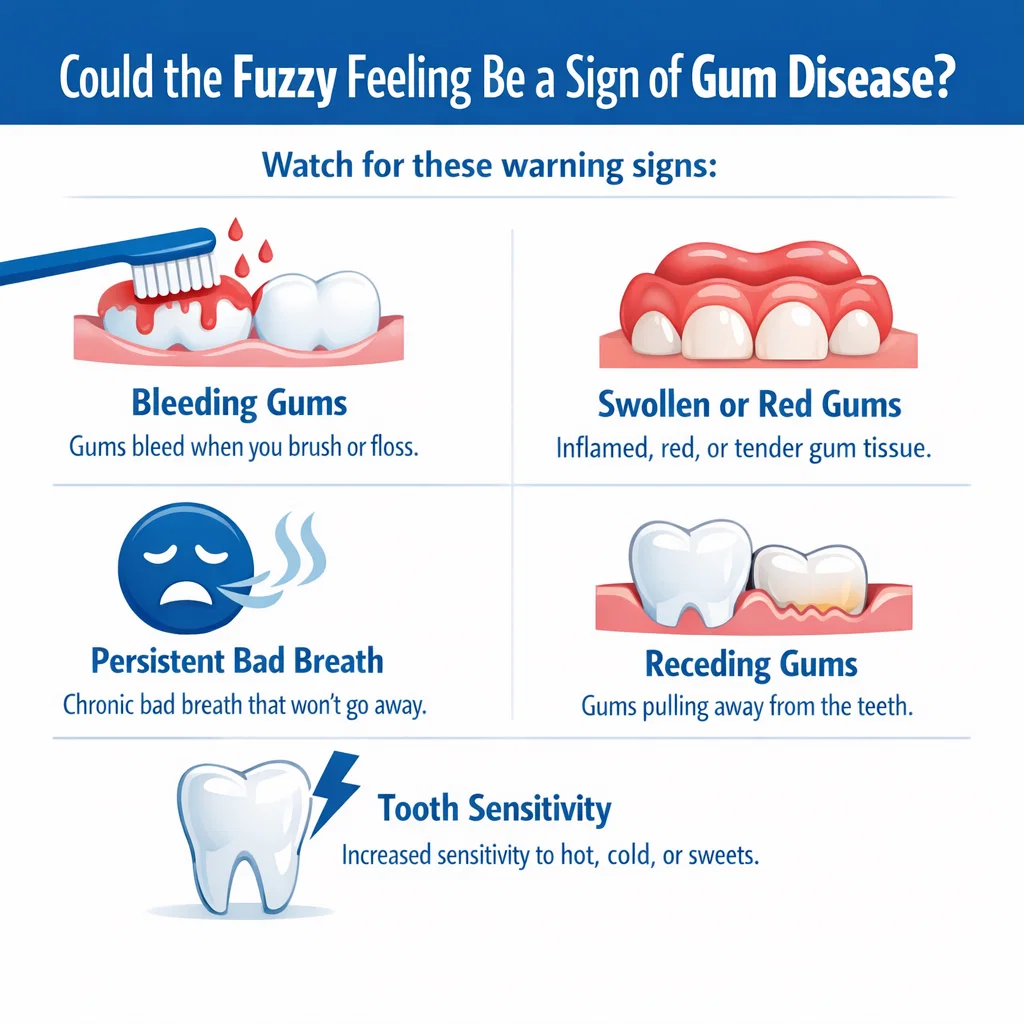
Watch for these warning signs alongside your fuzzy teeth:
- Gums that bleed when you brush or floss
- Red, swollen, or tender gum tissue
- Persistent bad breath despite consistent oral hygiene
- Gums that appear to be receding from your teeth
- New or increased tooth sensitivity
None of these should wait. Gingivitis caught early is completely reversible with a professional cleaning and better home care. If it’s allowed to progress to periodontitis, the damage to the bone and tissue supporting your teeth becomes permanent.
What Helps Get Rid of That Fuzzy Feeling
Most causes of fuzzy teeth respond well to a combination of better home care and professional treatment. Here’s what to focus on:
- Brush with a soft-bristled brush for a full two minutes, twice a day, using a fluoride toothpaste.
- Floss once daily to clear plaque from between your teeth where your brush can’t reach.
- Use an antibacterial mouthwash if your dentist recommends one — it can reduce overall bacterial load in your mouth.
- Drink more water throughout the day, and ask your dentist about xylitol products if dry mouth is a recurring issue.
- Cut back on sugary and starchy snacks, particularly between meals when saliva flow naturally dips.
- Schedule a professional cleaning at least twice a year — it’s the only way to remove tartar that’s already hardened.
If you’re already doing all of this consistently and the fuzzy feeling persists, a professional exam will tell you exactly what’s going on. Sometimes it’s a subtle technique issue, sometimes it’s an early sign of something that needs treatment — either way, knowing is better than guessing.
When to See a Dentist in Clearwater
The fuzzy feeling that lingers after brushing isn’t something you have to just put up with. If it’s been more than six months since your last cleaning, or if you’re noticing any gum disease symptoms, getting an appointment scheduled is the right move. At The Dentist Place of Clearwater, same-day appointments are available for new patients, and the team will guide you on what to do next.
Located at 250 N Belcher Rd, Clearwater, FL, the practice serves patients across the area, from Safety Harbor to Dunedin and everywhere in between. Call us or book us online. Same-day appointments are available for new patients.
People Also Ask
Can certain medications make my teeth feel fuzzy?
Yes. Over 400 medications cause dry mouth as a side effect, which reduces the saliva that normally washes plaque off teeth. Antihistamines, antidepressants, and diuretics are common culprits. Let your dentist know what you’re taking so they can adjust recommendations accordingly.
Is an electric toothbrush better for removing plaque?
Research generally shows that oscillating-rotating electric toothbrushes remove more plaque than manual brushing over time. That said, technique still matters most. A manual brush used correctly outperforms an electric one used carelessly every time.
How quickly does plaque reform after brushing?
Plaque starts re-forming within 20 minutes of eating. This is why rinsing with water after meals helps, and why brushing before bed is particularly important — saliva flow naturally slows during sleep, giving bacteria more opportunity to build up overnight.
Can whitening toothpaste help with the fuzzy feeling?
Whitening toothpastes use mild abrasives that scrub surface residue. They won’t address the bacteria driving the problem. A regular fluoride toothpaste, paired with proper technique and daily flossing, is more effective at managing plaque.
How often do I really need a professional cleaning?
Twice a year covers most adults. If you have a history of gum disease, heavy tartar buildup, or chronic dry mouth, your dentist may recommend cleaning every three to four months to stay ahead of problems.