Same day appointments Available | $99 New Patient Special Includes Exam and X-rays

By The Dentist Place of Clearwater | March 23, 2026
Most people know smoking is deleterious to the lungs. Fewer realize just how much it can derail a dental procedure. Tooth extractions, implants, and bone grafts – all of these rely on your body’s ability to heal quickly. Smoking interferes with that process at almost every level, and the consequences can range from a slow, painful recovery to outright procedure failure.
What Smoking Does to Your Mouth
Tobacco smoke contains thousands of chemicals that you and I may not even be able to name. Many of them directly affect your oral tissues, constricting blood vessels, suppressing immune activity, and drying out the oral environment. The effects are measurable, and they matter enormously for surgical recovery.
Patients who smoke and are scheduled for oral surgery are counseled to stop before their procedure to make the most of the surgery.
The Ways Smoking Raises Your Surgical Risk
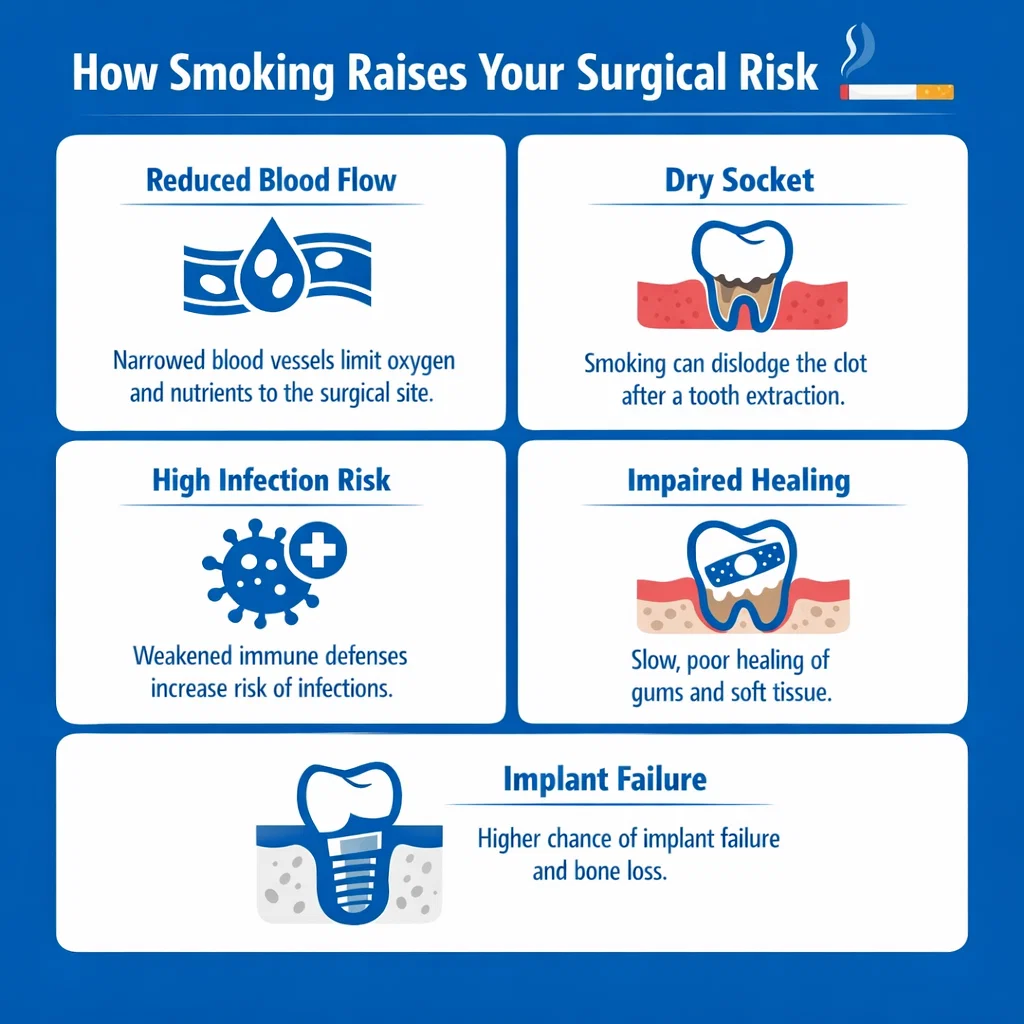
Reduced Blood Flow to the Surgical Site
Nicotine causes blood vessels to narrow, a process called vasoconstriction. After surgery, your body depends on a strong, steady blood supply to deliver oxygen, white blood cells, and clotting factors to the wound. When circulation is compromised, the healing process slows dramatically. Tissues that should be regenerating within days can remain inflamed for weeks.
This is relevant for implant procedures and bone grafts, where new tissue needs to grow into and around a foreign material. Without adequate blood flow, that integration, called osseointegration for implants, is far more likely to fail.
Dry Socket After Tooth Extraction
Dry socket (alveolar osteitis) occurs when the blood clot that forms in an extraction site is dislodged or dissolves too early, leaving the bone and nerve endings exposed. It’s one of the most painful post-operative complications in dentistry. Smokers are more likely to experience it than non-smokers.
The suction move you make during smoking is part of the problem, as it can dislodge the clot. But the chemicals in tobacco also slow clot formation in the first place, making the extraction site harder to protect.
High Risk of Infection
Smoking compromises your mouth’s immune response. Saliva composition changes, beneficial bacteria are suppressed, and the gum tissue becomes less effective at fighting off pathogens. For a patient recovering from a surgical procedure, this means the wound site is more vulnerable to bacterial infection during the critical early healing window.
Infections after oral surgery aren’t just uncomfortable — they can require additional procedures, antibiotic treatment, or, in serious cases, revision surgery. Preventing infection starts well before the procedure itself.
Impaired Soft Tissue Healing
The gum tissue around a surgical site needs to close and seal properly for healing to proceed. Tobacco chemicals slow the proliferation of fibroblasts — the cells responsible for building new connective tissue — and reduce collagen production. This means gum tissue takes longer to heal, and the resulting tissue may be weaker and less resilient than in a non-smoker.
For procedures such as gum contouring, bone grafting, or implant placement, this soft-tissue response is foundational. Poor healing at the gum level compromises everything built on top of it.
Implant Failure
Research published in the International Journal of Oral and Maxillofacial Implants found that smokers have a significantly higher implant failure rate than non-smokers. The failure happens because osseointegration (the process by which the implant fuses with the jawbone) requires healthy bone density, adequate blood flow, and a stable immune environment. Smoking undermines all three.
Patients who continue to smoke after implant placement face an even higher risk of late failure, meaning the implant may integrate initially but then fail months later as the surrounding bone and tissue break down.
How Long Before Surgery Should You Quit?
The honest answer is that quitting sooner is always better. Clinical research generally suggests stopping at least two weeks before a procedure to allow blood flow and tissue health to begin recovering. Some studies indicate that quitting even 24 to 48 hours before surgery reduces blood carbon monoxide levels enough to improve oxygen delivery during healing.
After the procedure, the risk window doesn’t close immediately. Most oral surgeons recommend avoiding tobacco for at least 72 hours post-extraction and longer after implant or graft procedures. The healing phase, not just the surgical day, is when the damage from smoking is most likely to manifest.
What Patients Should Know Before Their Procedure
At The Dentist Place of Clearwater, the clinical team is straightforward about what smoking means for surgical outcomes, giving them the information they need to achieve the best possible result.
If you’re a smoker and you’re considering any type of oral surgery in Clearwater, the conversation about tobacco should happen at your consultation, not after a complication arises. The team at The Dentist Place will walk you through your procedure, your risk factors, and a realistic timeline for the safest recovery.
Located at 250 N Belcher Rd, Clearwater, FL, the practice accepts new patients and offers same-day appointments for consultations and urgent cases. Whether you’re coming from Dunedin, Safety Harbor, or the Clearwater Beach area, getting the full picture before your procedure is always worth the trip.
What You Can Do Right Now
If you smoke and have a procedure scheduled, these steps make a real difference:
- Tell your dental team upfront. Your surgeon needs to know your smoking history to plan appropriately.
- Set a quit or pause date. Even a temporary break around your surgery window significantly lowers your risk.
- Ask about nicotine replacement. Patches and lozenges don’t carry the same vascular risks as smoking, though your dentist should be aware of what you’re using.
- Follow post-operative instructions exactly. No straws, no smoking, and no vaping – these rules exist because the suction and chemicals genuinely compromise healing.
- Stay hydrated and keep follow-up appointments. Catching complications early is the difference between a minor adjustment and a major setback.
Your surgical outcome starts with the conversation before the procedure. If you’re a smoker planning any type of dental surgery, don’t go in without getting the full picture. The team at The Dentist Place of Clearwater is direct, patient, and focused on delivering the best possible results. Call or request an appointment online for same-day appointments.
People Also Ask
Does vaping carry the same surgical risks as smoking?
Yes, in most respects. Vaping still delivers nicotine, which causes vasoconstriction and impairs healing. The aerosol also dries out oral tissues. It’s not a safe alternative in the surgical recovery period, and patients should disclose vaping to their dental team just as they would cigarette use.
Can I use a nicotine patch instead of smoking before surgery?
Patches are generally considered safer than smoking because they eliminate the combustion chemicals and suction mechanics. However, nicotine itself still affects blood vessels. Always discuss any nicotine product with your oral surgeon before your procedure so they can factor it into your care plan.
Will quitting smoking improve my chances of implant success?
Yes, meaningfully. Research consistently shows that former smokers have implant success rates much closer to non-smokers than to current smokers. Quitting before placement and staying smoke-free during the integration period, three to six months, is one of the most impactful things a patient can do.
How does smokeless tobacco compare to cigarettes for surgical risk?
Smokeless tobacco still contains nicotine and dozens of carcinogenic chemicals that affect gum tissue and blood flow. It also increases the risk of oral cancer. For surgical recovery, it carries many of the same risks as smoking and should be discontinued before any oral procedure.
Is it too late to quit if my surgery is in a few days?
It’s not too late, but the benefit is smaller. Even stopping 48 hours before surgery improves blood oxygen levels. Every smoke-free hour during recovery matters. Quitting for even the recovery window — one to two weeks — can meaningfully reduce your risk of complications.